

When it is time to straighten your teeth, how do you choose between Invisalign® Clear Aligners and traditional bracket and wire braces? While both correct the direction and spacing of your teeth, there are some key differences that could impact your smile correction experience. Explore the pros and cons of each to make the decision that is best for your smile.
The Traditional Metal or Ceramic Braces Process
Let’s start with the most common method of bite, tooth direction, and spacing correction – traditional bracket braces. The process for traditional braces typically begins with a visit to your dentist to get a referral to the orthodontist. Your first visit to the orthodontist will usually include X-rays and bite impressions for a mold of your teeth during a consultation. The impression is made by trays filled with a putty-like substance that is inserted into your mouth. By biting down and allowing the material to set for a few minutes, the orthodontist will have a mold of every nook and cranny of your teeth and gums to help craft your treatment plan for straightening crooked teeth, filling gaps, or creating spaces where teeth are overcrowded. During this visit, you will also be able to discuss the process in more detail, receive an expected cost and duration assessment, and ask questions.
Next, you will return to the orthodontist to have spacers placed where your teeth are overcrowded, or you may be ready to have your tooth surface cleaned for each bracket to be cemented onto your teeth. When your brackets are placed, a wire will also be added for the first stage of your smile correction. For aesthetic preferences, there will be a choice between clear ceramic brackets or metal brackets and traditional or lingual (internal) placement. Keep in mind that clear ceramic brackets often cost more than metal and ceramic brackets are more fragile than metal brackets. Additionally, you will have a choice of rubber band colors, and you may have an option to use a frosted or metal colored wire.
Once your brackets and wires are in place, you will receive instructions for caring for your teeth and braces, as there will be some recommended changes to your diet and hygiene routine. The dietary restrictions will help you avoid damaging your brackets and wires. Examples include removing overly sticky or crunchy foods from your diet and cutting up hard foods like apples into tiny bites or cooking them to make them softer to chew.
Cleaning your teeth and gums with proper brushing and flossing techniques and tools is important to reduce the risk of periodontal disease, inflammation and discomfort, tooth discoloration, and tooth decay. While wearing braces, your oral hygiene routine is going to take a bit more time and attention as the wire often hinders being able to reach those tight spaces, especially as the spaces close.
From this point until your braces are removed, you can expect to periodically have some wire tweaks and fresh bands with a little discomfort following each visit. The good news is you get to choose your color of bands with each visit, which can be fun! Your orthodontist will give you instructions on how to prepare for each visit as well as expectations for the next correction. Due to the increased difficulty with brushing and flossing your teeth, it is critical to have your teeth cleaned and examined by your dental team during regular dental checkup appointments.
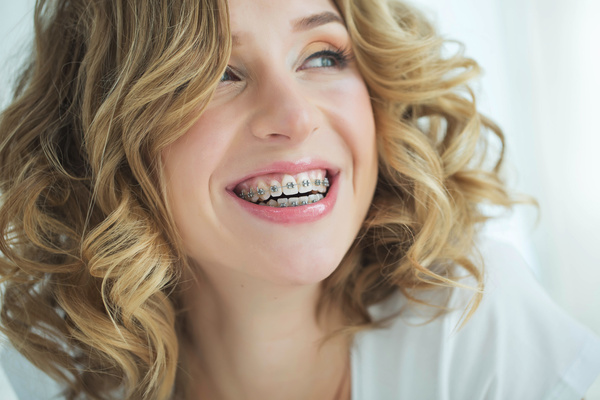
Traditional Metal or Ceramic Braces Pros and Cons
Pros
- Effective control over each tooth’s correction for a straighter, more evenly spaced smile.
- May be required for more complex orthodontic cases.
- Clear ceramic and lingual (internal) braces are less noticeable than metal braces.
Cons
- Typically requires an impression using trays and molding material, which some patients find uncomfortable.
- Dietary restrictions.
- Restricts the ability to properly clean teeth and gums, which can give the wearer bad breath and result in additional dental expenses and oral pain.
- Requires more frequent visits than Invisalign® Clear Aligners.
- Often reported to produce more discomfort than Invisalign® Clear Aligners.
- Wires and brackets can irritate or scrape the inside of the mouth.
- There can be staining of the ceramic brackets over time.
- Visible wires.
- The brackets are noticeable, though this is less of an issue if they are ceramic.
- The brackets can break, resulting in additional visits and time out of work or interruption of other activities. This is especially true with the ceramic brackets.
- Your cost may increase for clear ceramic brackets, frosted wires, or lingual (internal) braces.
The Invisalign® Clear Aligners Process
Unlike traditional braces, you can discuss your Invisalign® Clear Aligners with your dentist during your next dental appointment. If you live in the Hickory, NC area, Dr. Hanigofsky at Hickory Dentist by Dental Health Concepts will use a Cone Beam CT scan to produce a 3D image of your tooth and gum topography. Think of it as taking a high-tech picture of your teeth to develop a detailed roadmap that includes every groove or line, as well as potential hazards like damaged nerves or tooth decay.
Your dentist or orthodontist will use the iTero Element™ scanner to develop a plan for your treatment path to a straighter and more even smile. Once your custom plan is ready, you may have tooth-colored Invisalign buttons (SmartForce™ attachments) that look like tiny, hardly noticeable bumps placed on specific teeth, depending on your needs. Then, you will receive your first clear Invisalign aligners, and you can begin wearing them in that same appointment. As the aligners are clear, thin, and custom-crafted to fit snuggly against your teeth, they will not detract from the beauty of your smile. During this appointment, you will receive instructions on how important it is to wear your Invisalign aligners at least 22 hours per day. However, unlike metal or ceramic braces, you can remove them to eat or perform your usual brushing and flossing routine.
No special dietary restrictions here! Since you can remove your aligners to eat and clean your teeth, you will not have a restricted diet or fear breaking your corrective devices.
What about the adjustment discomfort and potential for internal mouth irritation? While there will likely be a tightening sensation, patients often report less soreness with Invisalign aligners than with traditional metal or ceramic braces. Also, there are no wire ends or exposed brackets to cause additional irritation. If your dentist offers Invisalign® Clear Aligners, another plus is the consistency of care you receive by having your dentist review your treatment process at the same convenient location.
Like metal or ceramic braces, you will be required to schedule regular checkup visits with your dentist or orthodontist to ensure your teeth are shifting as expected and pick up your next phase aligners. In addition to swapping out your old aligners for fresh new ones, the great thing about your aligner checkups at your dentist’s office is you can have your teeth professionally cleaned and your oral health examined during the same appointment by scheduling your routine oral health exams on the same day as your Invisalign checkup. This convenience can save you time and money at least twice per year!
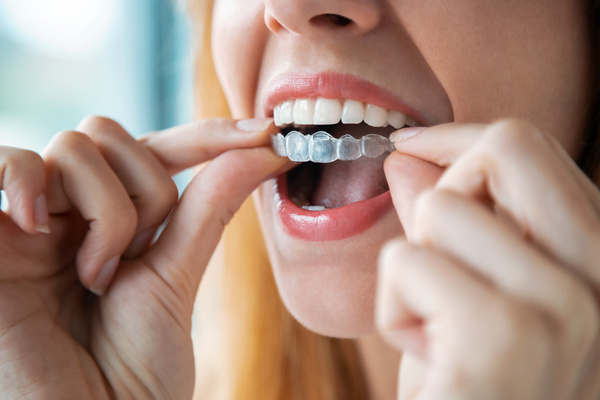
Invisalign® Clear Aligners Pros and Cons
Pros
- Effective control over each tooth’s correction for a straighter, more evenly spaced smile.
- Better aesthetics than metal or ceramic braces with clear, custom-fitted aligners that let your smile shine.
- Often costs about the same as traditional braces.
- Some dentists, such as Dr. Hanigofsky at Hickory Dentist by Dental Health Concepts in Hickory, NC, are able to incorporate your Invisalign treatment process into your dental healthcare plan for one convenient location, fewer appointments, less waiting time, and improved treatment consistency.
- May save money and time in the long run when coupling dental checkups during the Invisalign aligner pickup dates, limiting time off work for extra visits for broken brackets and wires, and reducing the risk of increased inflammation and decay from being able to brush and floss properly.
- Patients often report less discomfort compared to metal or ceramic braces throughout the entire process.
- No dietary restrictions.
- No special hygiene requirements, and there is less of a chance for your teeth to be discolored upon completion of your correction process.
Cons
- More complex cases may require additional orthodontic measures, which may include metal or ceramic braces. Before committing to Invisalign® Clear Aligners or traditional braces, be sure to ask your dentist or orthodontist which treatment method is best for your specific needs.
Overall, from a complete cost, care consistency, convenience, comfort, appearance, and level of control perspective, the Invisalign® Clear Aligners process may be the “clear” winner for many patients. That said, more complex cases may require additional orthodontic care, including metal or ceramic braces. To determine which is best for straightening, balancing, and adjusting your smile, ask your Invisalign dentist or orthodontist which is your best option. To schedule a free cosmetic dental consult with Dr. Hanigofsky in the Hickory area, call (828) 233-2133 or fill out our contact form online.